

Community Archaeology

CIfA Community Archaeology Group logo
Join this group

For CIfA Members

If you are a CIfA member, you can join any CIfA Group that matches your interests. 

  • Log in to your CIfA account Member Area
  • Go to the My groups & lists section of your profile
  • Select the Group(s) and Networks you’d like to join (there's no limit to how many you can join)
  • Your Group or Network membership will be added to your account

Once joined you’ll receive any Group communications and can take part in events, discussions, and activities.

Watch this video for step by step instructions for CIfA members to join any Group or Network.

For non-CIfA members

You don’t need to be a CIfA member to join a CIfA Group. All of our Area or Special Interest groups welcome non-members to join their mailing lists and activities by registering as a Group Supporter for £15 per Group per year.

  • Joining a Group does not require CIfA membership
  • This enables you to receive all of the benefits of the Group which CIfA members receive, but only for the specific Group you join

More information about joining a Group as a group supporter can be found on the Join as a Group supporter webpage, or you can register to join any Groups using this simple form. 

Not sure which option applies to you?

If you’re unsure how to join, whether a Group is right for you, or need help with the process, you can email groups@archaeologists.net for guidance. We're always happy to point you in the right direction!

Committee
Chair
Jess Lowther
Treasurer
Frank Giecco
Secretary
Laura Miucci
Committee member
Rebecca Dolan
Committee member
Sarah-Jane Farr
Committee member
Perry Gardner
Committee member
Emily Johnston
Committee member
Richard McConnell
Advisor
Mike Nevell
Specialist competence matrix

Thank you to those who contributed to our consultation about the competency matrix. The specialist matrix is to assist applicants and the Validation committee to see where you demonstrate the grade applied for when working in community archaeology.

Three year plan
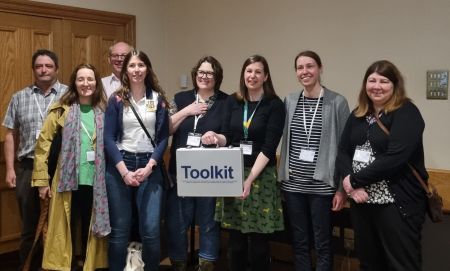
A photo of the Community SIG committee members holding a briefcase labelled 'toolkit'

The Community Archaeology Group (CAG) was originally established in 2011 as Voluntary and Community Archaeology Special Interest Group. We consider community engagement to be an integral part of professional archaeological practice and should be embedded in project design and delivery. Community engagement is a critical aspect of delivering public benefit through archaeology. The role of community archaeologists (paid or unpaid) is fundamental in this process.

  • To provide a recognised voice within CIfA for furthering the interests of community archaeologists and delivery of community engagement.
  • To embed community engagement in archaeological practice and support its meaningful delivery to the highest standard.
  • To advise the Board of Directors and its Advisory Council and committees on issues relating to community archaeology and engagement, both within the context of CIfA and within the discipline of archaeology.
  • To provide guidance to ensure that community archaeologists (and the organisations to which they belong), have the competence to carry out their roles to the highest possible standards.
  • To promote the adoption and implementation of CIfA Standards, guidance and policy by community archaeologists and the organisations to which they belong.
  • To work with partner organisations and stakeholders across the sector to support and promote community archaeology.
Group recordings and resources

This group session at the CIfA Conference 2019 explored how we can improve the community engagement aspect of archaeological investigations to maximise the potential for sustained engagement with local communities and to build long lasting, positive legacies. We are interested in hearing about attempts to do this from across the heritage sector.

View the CIfA Conference 2019 page to watch this session, as well as others.

On Thursday 22 May 2025 we led a discussion titled ‘Public Engagement in Archaeology - Proportional Participation' and explored how we can ensure that engagement strategies are appropriately scaled, inclusive and responsive to the communities we work with by utilising the Toolkit for Public Engagement. We discussed the toolkit component, public benefit and social value and active and passive participation.

You can view the slides for the presentation below.

Events

Event date
No events found