
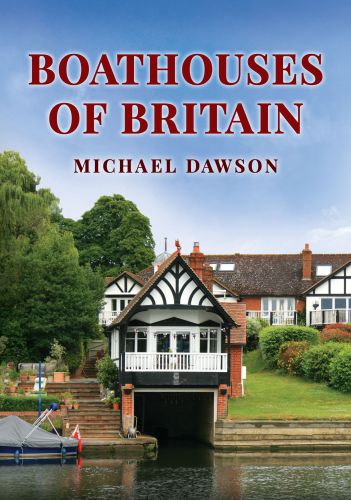
Michael Dawson provides a tour through Britain, Ireland and the Isle of Man’s many and varied boathouses in this well-illustrated introductory text. That he deals with 250 boathouses in under 100 pages with 100 illustrations gives you an idea of the breakneck pace of the book.
Britain is not short of boathouses, being a maritime nation with nearly 7,000 miles of inland waterways, but they are a much overlooked class of building. This book provides a good starting point for anyone interested in historic buildings, particularly those without specialist knowledge. Many of the places mentioned in the book are easily accessible and are almost inevitably in picturesque locations.
The author provides a knowledgeable overview of boathouses’ archaeological and architectural history starting with the Roman and early medieval periods, before moving to a typological approach, based on the functional of the boat housed, although still chronologically arranged. He takes us rapidly through boathouses that served military purposes, through lifeboats to boathouses for working and then recreational boats. This last category takes in everything from the boathouses of country house estates to rowing clubs. Perhaps the section on boathouses that served more industrial and commercial shipping could have been developed with more examples.
One area which could be covered in a further publication is a greater exploration of what went on inside a boathouse. The author provides only a single boathouse plan although by the nineteenth century they were clearly complex buildings, housing a social life as well as a boat. While plans are more demanding of the reader than well-taken photographs, they enable the author and reader to get inside the buildings rather than simply admire them from the outside. Too often the boathouses the author describes are empty shells in which we must imaging boats, people and activity. Plans would prompt discussion about how people used the interior spaces for both labour and social interaction. The author criticises modern boathouse design as being too functional and of failing to ‘make a statement’ while not discussing in any depth the types of statement that historic boathouses made. The functionality of modern boathouses is in itself a statement about those designing and commissioned them.
Perhaps a second book developing these topics with fewer boathouses but ones selected for the stories they can tell might be welcome. Clearly this is a building type that deserves more research and attention from both the general public and professionals, but this book provides an excellent starting point for anyone who wants to explore the architectural and archaeological aspects of Britain’s waterborne past without getting their feet wet.