
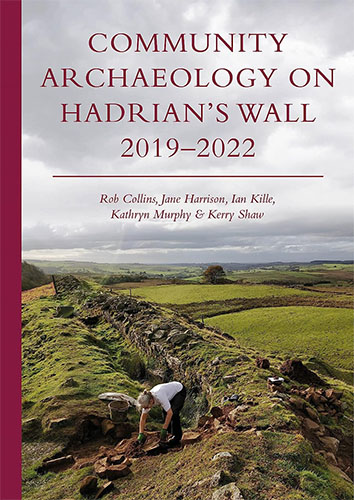
Community Archaeology on Hadrian’s Wall 2019–2022 is an inspiring and thoroughly enjoyable account of what can happen when communities are welcomed into heritage work with kindness, trust, and genuine openness. Although the book documents a large, multi-strand project, it feels first and foremost like a story about people, place, and shared purpose.
The authors set the scene clearly in Chapter 1, introducing the WallCAP project and its aims to expand knowledge, reduce risk, and bring local communities into the care and understanding of Hadrian’s Wall. These foundations lead naturally into Chapter 2, which is one of the book’s greatest strengths. Here, readers get a warm and detailed look at the people who took part. The demographics, maps, and graphs (pp. 8 to 12) show wide engagement across ages, backgrounds, and localities, while volunteer reflections bring a real sense of humanity. Many describe gaining confidence, companionship, and joy from being involved, which is supported by the wellbeing and satisfaction data presented later in the chapter (pp. 23 to 25).
The book demonstrates just how thoughtful and inclusive the project design was. More than 329 events took place over the project’s lifespan, including excavation, geophysics, conservation work, training sessions, book clubs, film clubs, online talks, and village-based research. This variety ensured that people could contribute in ways that suited their interests, abilities, and comfort levels. When the pandemic disrupted in-person activity, the team adapted quickly through digital sessions, social check-ins, and online learning. These moments of care and creativity helped volunteers stay connected and feel supported.
The project’s main strands, Heritage at Risk and Stone Sourcing and Dispersal, are presented in a way that makes the technical aspects easy to follow without losing depth. The many photos, maps, and diagrams make the work tangible, showing volunteers recording stonework, excavating trenches, inspecting geology, and co-curating museum displays. This visual storytelling reinforces the message that volunteers were not just participants, but vital contributors whose work shaped real heritage outcomes.
The exhibitions and Village Atlas projects are particularly uplifting. Volunteers helped shape interpretation, select objects, and share local knowledge. Knowing that more than 230,000 visitors experienced the exhibitions they helped create gives a sense of pride that radiates through the pages.
Warm, readable, and rich with real voices, this book offers an honest and hopeful model for community archaeology. It shows how heritage can bring people together, build confidence, and strengthen the bond between communities and the places they care about.
A highly recommended read for anyone interested in archaeology, community engagement, or the wellbeing benefits of heritage.
Community Archaeology on Hadrian’s Wall 2019–2022 - Oxbow Books